
What it is
Braces are fixed orthodontic appliances that move teeth using brackets and wires.
Braces
Learn how braces are used to align teeth and improve bite relationships, and what records come before appliances are fitted.
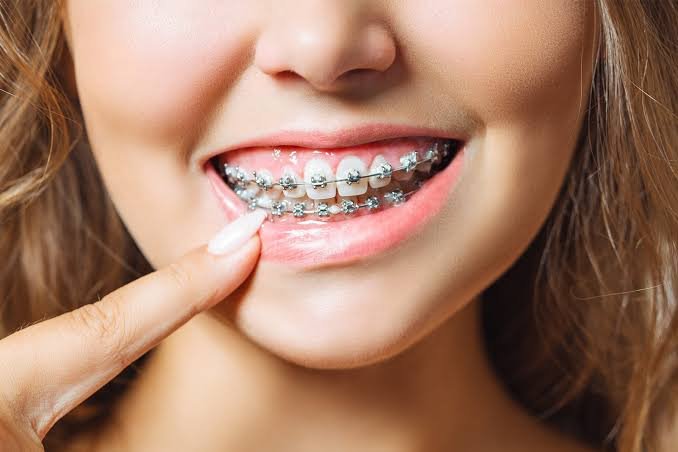
Braces are fixed orthodontic appliances that move teeth using brackets and wires. They may be considered for crowding, spacing, bite problems or to prepare for other dental work. Treatment time and appliance type depend on the diagnosis.
Braces are fixed orthodontic appliances that move teeth using brackets and wires.
Records may include photos, X-rays and impressions or scans.
Records may include photos, X-rays and impressions or scans.
White-spot decay can appear if plaque sits around brackets.
Keep adjustment visits.
Select your concern.
Metal braces are robust and often used for a wide range of movements. Ceramic braces are less noticeable. The right choice depends on case complexity and oral hygiene.
Braces are fixed orthodontic appliances that move teeth using brackets and wires. They may be considered for crowding, spacing, bite problems or to prepare for other dental work. Treatment time and appliance type depend on the diagnosis.
Records may include photos, X-rays and impressions or scans. Adjustments are scheduled periodically. Retainers are essential afterwards to limit relapse.
Age alone does not rule out braces. Gum and bone health must be stable. Children's timing may relate to growth and eruption.
A dental consultation and records can help determine whether braces, aligners or monitoring may be appropriate.
A dental consultation and records can help determine whether braces, aligners or monitoring may be appropriate.
A dental consultation and records can help determine whether braces, aligners or monitoring may be appropriate.
A dental consultation and records can help determine whether braces, aligners or monitoring may be appropriate.
Records may include photos, X-rays and impressions or scans. Adjustments are scheduled periodically. Retainers are essential afterwards to limit relapse.
Whether this treatment is appropriate depends on individual clinical evaluation.
Metal braces are robust and often used for a wide range of movements. Ceramic braces are less noticeable. The right choice depends on case complexity and oral hygiene.
Records may include photos, X-rays and impressions or scans. Adjustments are scheduled periodically. Retainers are essential afterwards to limit relapse.
Age alone does not rule out braces. Gum and bone health must be stable. Children's timing may relate to growth and eruption.
Age alone does not rule out braces. Gum and bone health must be stable. Children's timing may relate to growth and eruption.
Many courses last 12–30 months, but simple and complex cases sit outside that range.
Age alone does not rule out braces. Gum and bone health must be stable. Children's timing may relate to growth and eruption.
Who may need braces? People with crowding, spacing or bite problems, after gums and decay are stable enough to move teeth.
Are braces only for teenagers? No. Adults with healthy gums can have orthodontics.
How long does orthodontic treatment take? Many alignments finish between one and three years. Missed appointments make it longer.
You describe what is bothering you and share medical and dental history. Questions come before any treatment is planned.
Photographs, X-rays as needed, and impressions or scans. Decay and gum disease are treated before moving teeth.
Findings are explained in plain language. Imaging is used when the extra detail is likely to change the plan.
Options, likely visits, aftercare and alternatives are discussed so you can decide.
Brackets and wires are fitted. Adjustments are scheduled. Broken braces should be reported.
Retainers are essential afterwards. Relapse is common without them.
Photos, X-rays and impressions or scans are taken before appliances are fitted.
Brackets and wires are placed. Ceramic or metal options depend on the case.
Periodic reviews move the plan forward. Missed visits slow progress.
Cleaning around braces is part of care, not optional.
Retainers are needed afterwards to limit relapse.
Fixed braces work all day because they stay on.
Some rotations and bite problems are more predictable with braces than with trays.
White-spot decay can appear if plaque sits around brackets.
Many courses last 12–30 months, but simple and complex cases sit outside that range. Forcing speed risks root shortening.
Teeth have a memory.
Braces versus clear aligners. Neither is automatically faster.
| Topic | Fixed braces | Clear aligners |
|---|---|---|
| Purpose | Align teeth and improve bite with brackets and wires | Move teeth with worn trays in selected cases |
| Typical process | Fit, periodic adjustments, retainers | Scans, attachments, sequential trays, retainers |
| Considerations | Hygiene around brackets; always on | Works only when worn ~20–22 hours |
The Dental Hut in Airoli has in-house CBCT and OPG. Imaging may assist evaluation when it is clinically required. It is not a scan for every patient.
Cone-beam CT creates a 3D volume of teeth and jaws. It may be used for implant channels, some impacted teeth and selected endodontic questions.
An OPG is a 2D panoramic X-ray of both jaws. It is often enough for a broad survey of teeth, wisdom teeth and jaw relationships.
A clinical examination of teeth, gums and bite remains the starting point. Imaging is added only when extra detail is likely to change the plan.
Follow the instructions provided by your dentist.
Soft foods after a new fit or tightening. Pain relief only as suitable for you.
Wax on poking wires. Call if a wire is cutting the cheek.
Retainers. Wisdom teeth and gum health are still reviewed.
Keep adjustment visits. Broken brackets add months.
Consider getting in touch if you notice:
Fees are quoted after examination.
Book a consultation to discuss your dental condition and treatment options
Every dental case is different. A consultation allows the dentist to evaluate your dental condition and discuss appropriate treatment options.
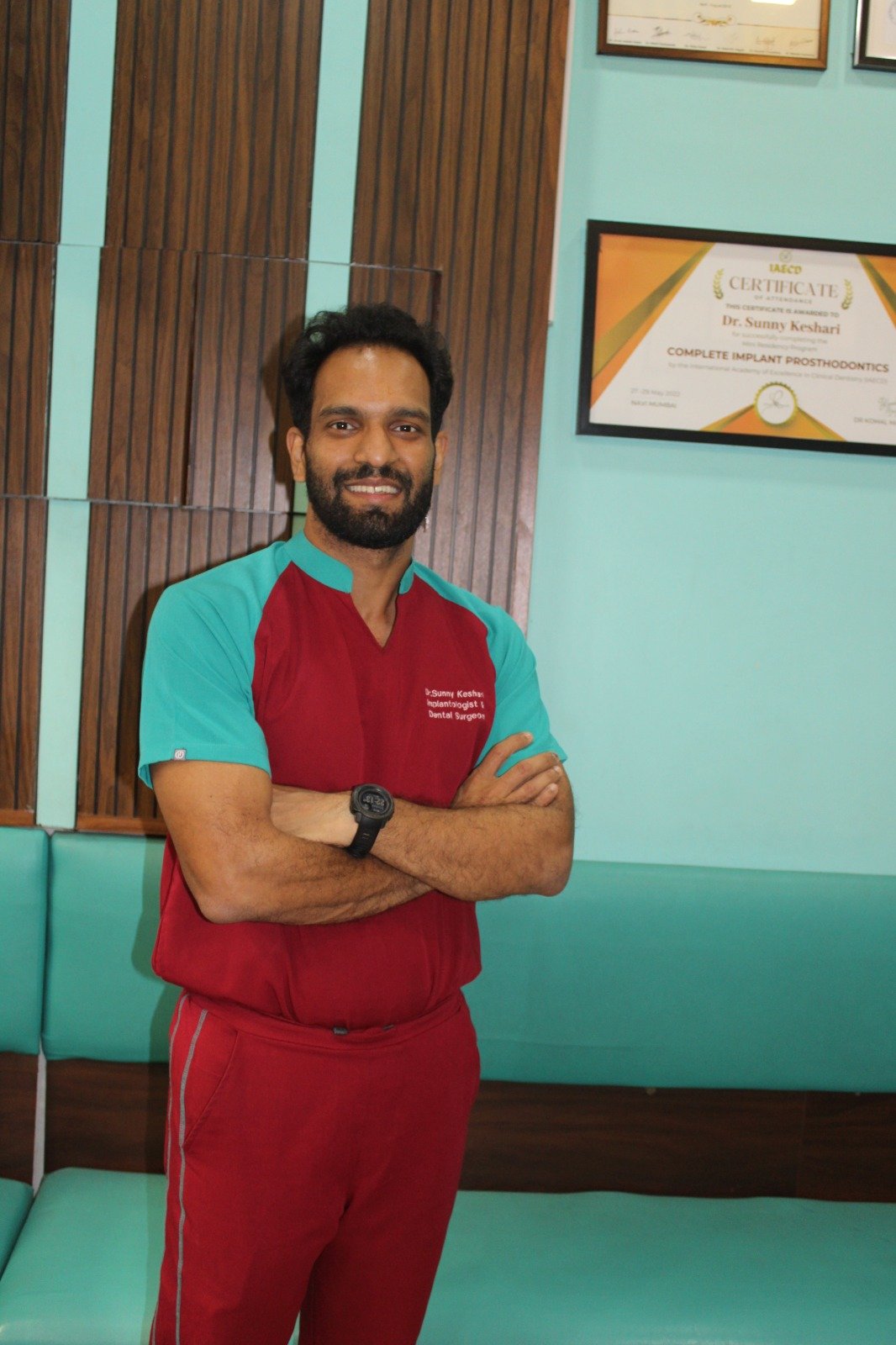
BDS · Dentist, Implantologist & Dental Surgeon
MSDC A-30506. Founder of The Dental Hut. BDS from Datta Meghe Institute of Medical Sciences, Wardha (May–June 2014 examination).
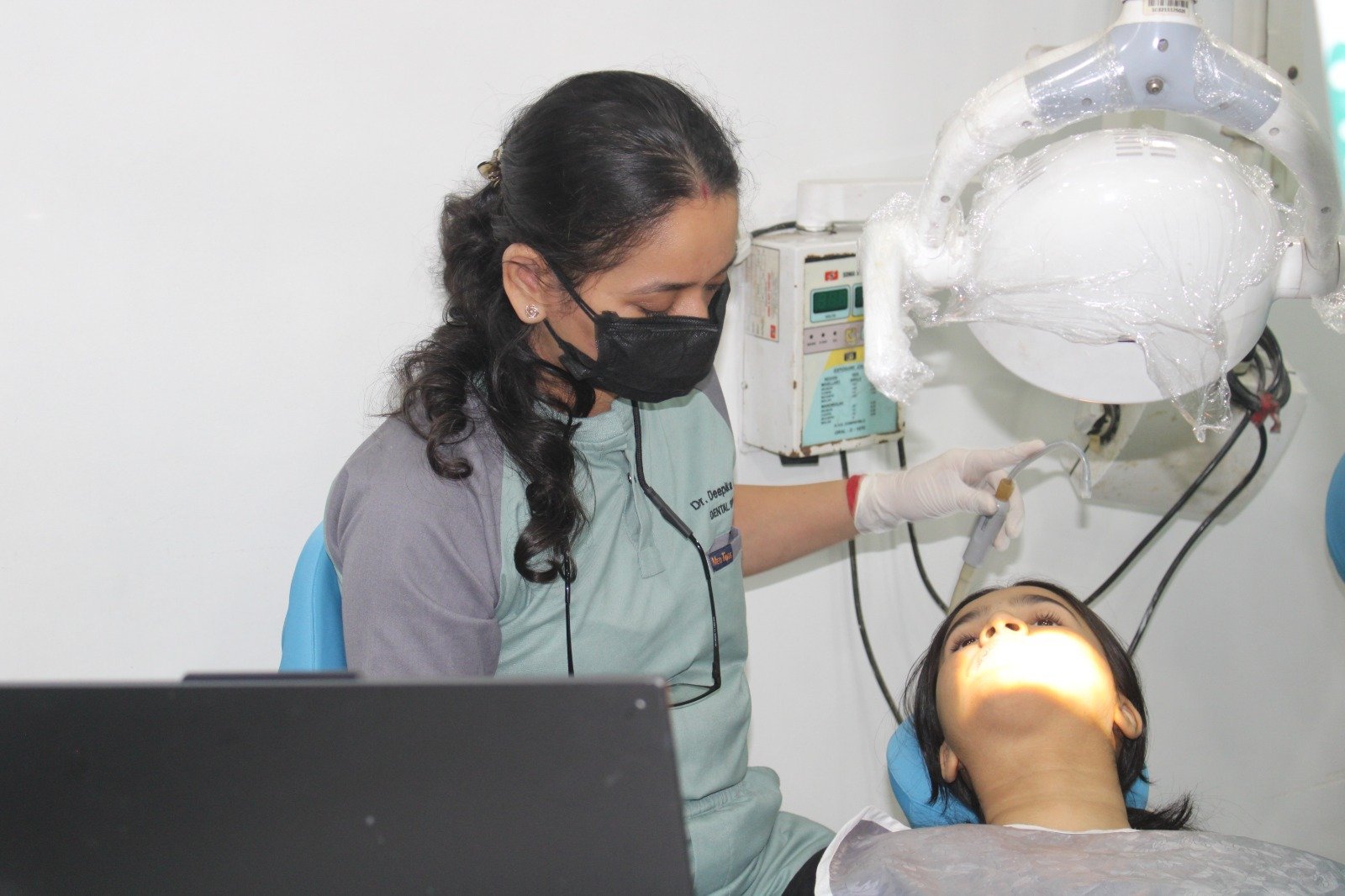
BDS · Dentist
MSDC A-30777. Co-founder of The Dental Hut. BDS from Datta Meghe Institute of Medical Sciences, Wardha.
I visited The Dental Hut for an orthodontic consultation regarding crooked teeth. The dentist explained the available braces options and the expected treatment process. Everything was communicated clearly, which made it easier to understand the treatment. I had a comfortable experience with the dental team in Airoli.
Sneha Kulkarni
People with crowding, spacing or bite problems, after gums and decay are stable enough to move teeth.
No. Adults with healthy gums can have orthodontics.
Many alignments finish between one and three years. Missed appointments make it longer.
Braces are fixed. Aligners are removable and need strict wear time. Aligners may not suit every movement.
They are less obvious, not invisible.
No single age. Mixed dentition, eruption and gum health decide timing.
Only with retainers. Relapse is common without them.
The Dental Hut provides orthodontic braces after records. Treatment length depends on the problem, not a package.
Request a visit on the contact page, call +91 84519 22257, or WhatsApp. The clinic confirms a slot during Monday–Saturday working hours.
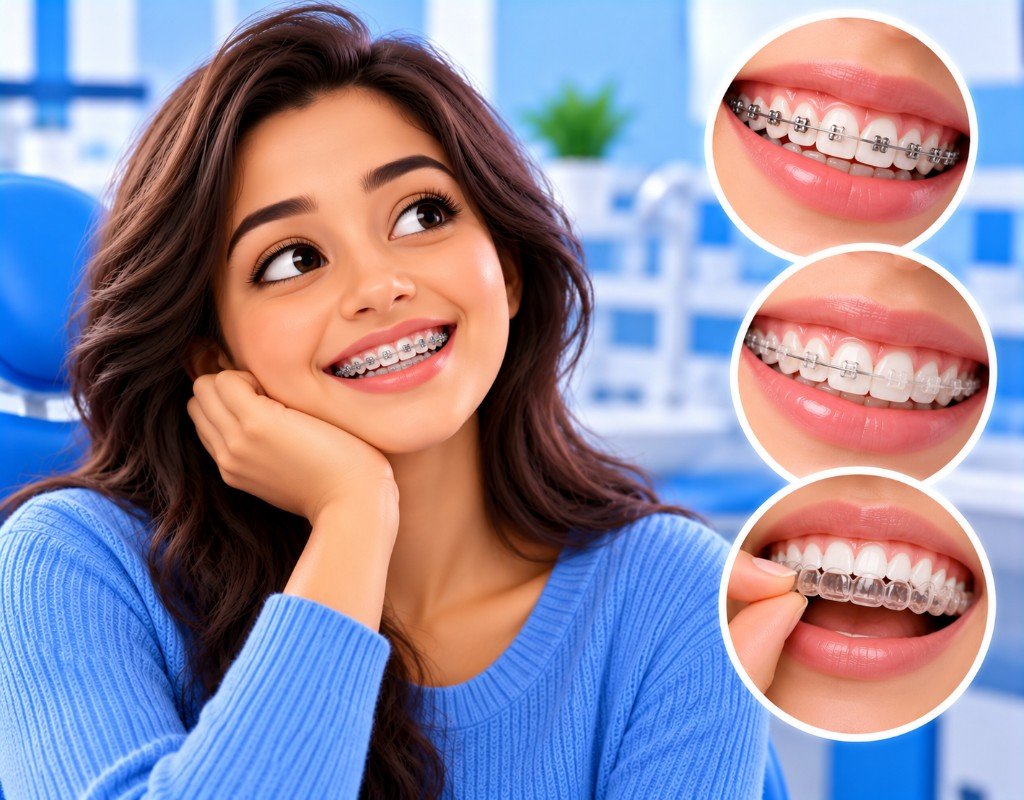 Braces in Airoli: Orthodontic Care at The Dental Hut
How brace treatment is planned in Airoli, including records, hygiene and retainers.
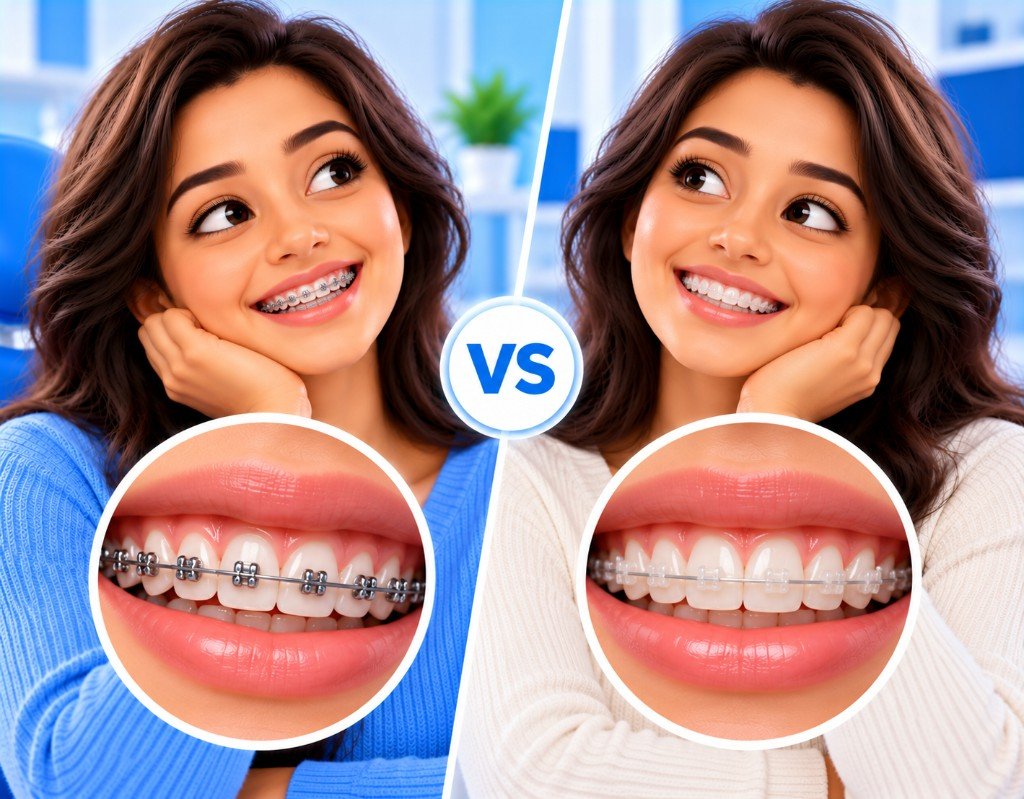 Metal Braces vs Ceramic Braces
Appearance, strength and hygiene differences between metal and ceramic braces.
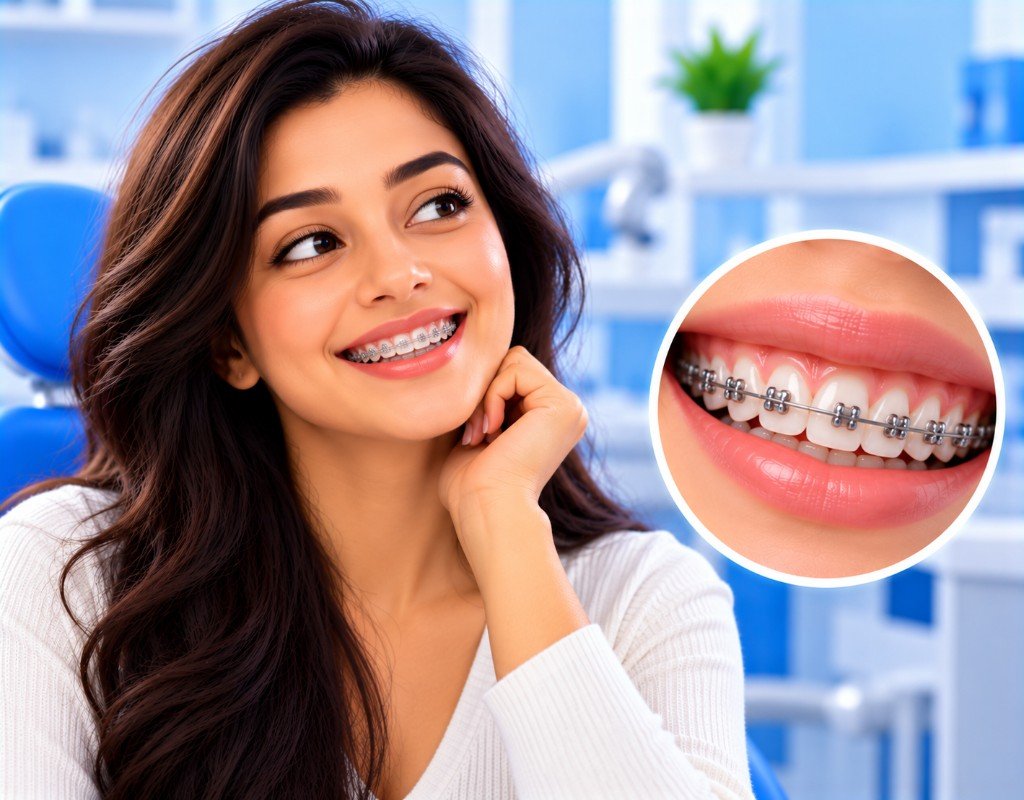 Braces for Adults in Airoli
Adult orthodontics including gum considerations, aligners and retention.
The Dental Hut is a dental clinic in Airoli, Navi Mumbai, providing consultations and dental treatments for a range of oral health concerns.
If you are looking into dental braces in Airoli, you can meet the dentists, read dental FAQs, or request a visit.
Dentist in Airoli · Dentist in Navi Mumbai · Dental clinic in Airoli
Have questions about your dental condition or this treatment? Book a consultation with The Dental Hut to discuss your concerns and understand the available options.
Monday–Saturday · 10:00 AM–1:50 PM and 5:30 PM–9:50 PM. Sunday closed. Plot B/21, opp. Apple Hospital, Sector 7, Airoli 400708.
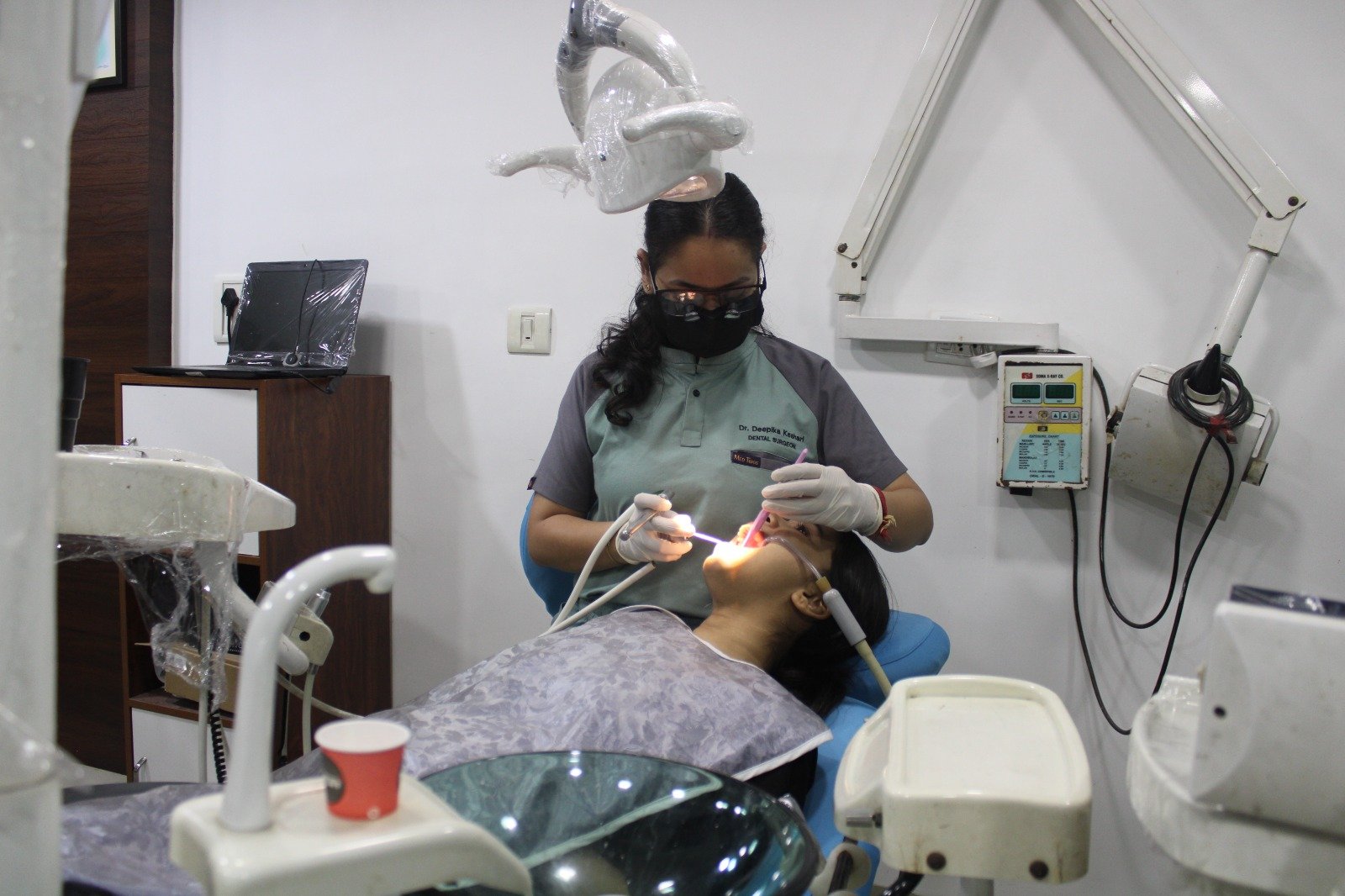 Clear Aligners
Learn more about clear aligners in Airoli
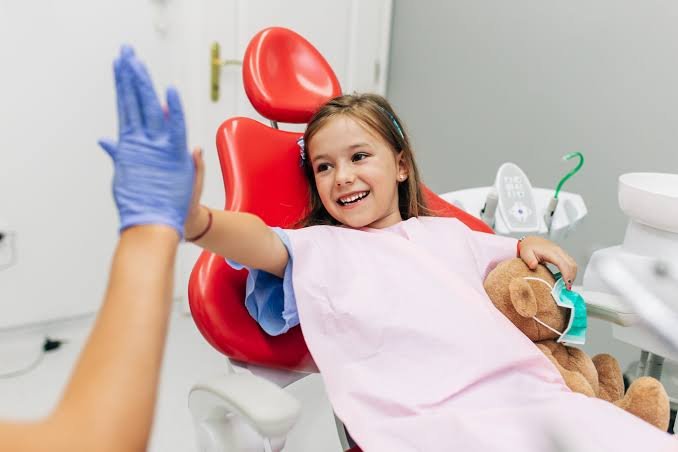 Kids Dentistry
Learn more about kids dentistry in Airoli
 CBCT & OPG
Learn more about cbct & opg in Airoli