
What it is
RCT treats the inside of a restorable tooth
A straightforward front tooth may be completed in a single longer visit. Molars have more canals and can need two visits. Retreatments and calcified canals take longer. Your dentist will estimate after seeing the X-ray.
RCT treats the inside of a restorable tooth
Numbness should prevent sharp pain during the visit
A strong outer restoration, often a crown on molars, protects against fracture
Infection can be quiet—X-rays still matter
Select a concern.
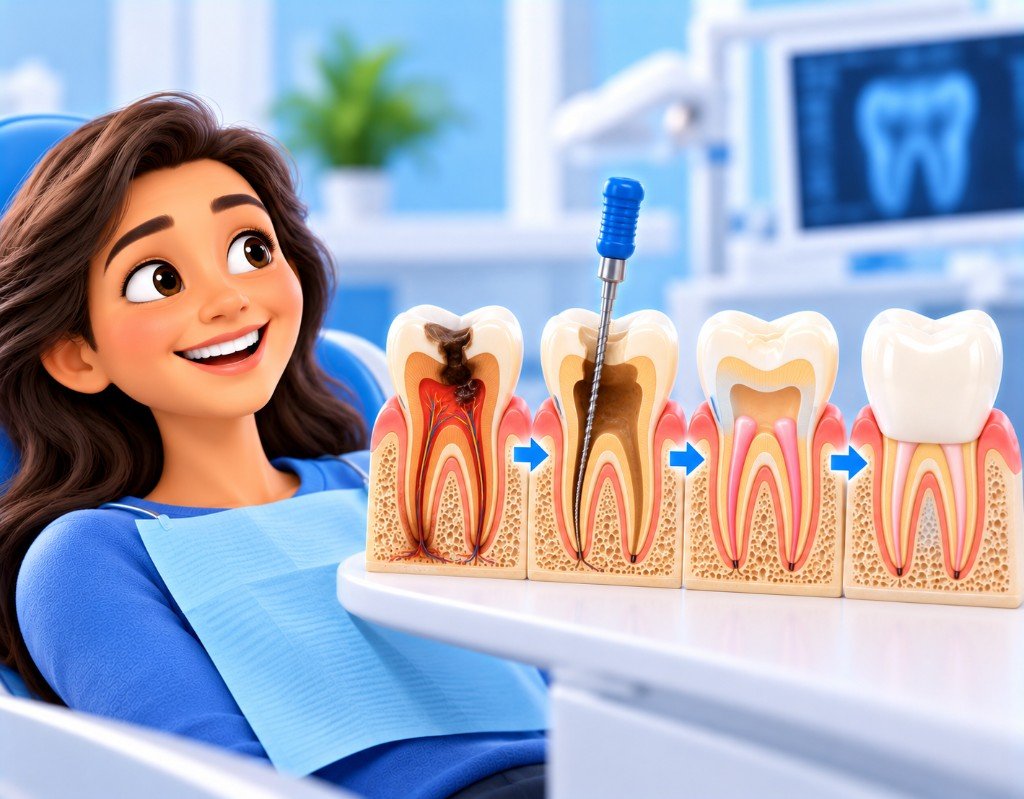
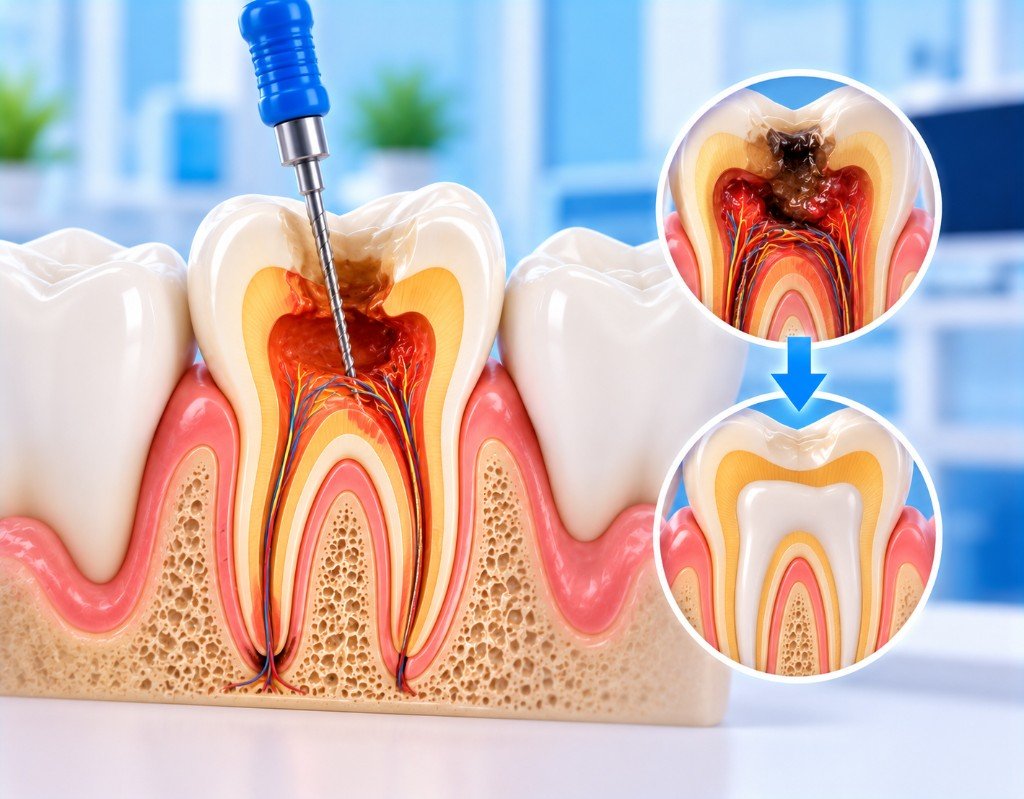
Root canal treatment (endodontic treatment) removes inflamed or infected pulp from inside a tooth, then cleans, shapes and seals the canal space. The aim is to keep a tooth that can still be restored, rather than extract it. People often call it “nerve treatment”; pulp also contains blood vessels and connective tissue.
It is considered when bacteria or trauma have inflamed or killed the pulp, or when a deep filling or crack has reached that space. Untreated infection can spread into bone. Extraction is the alternative when the tooth cannot be restored.
To place medicine inside the tooth if infection is heavy, or if time or anaesthesia limits the first session.
Chair time might be under an hour for a simple incisor or much longer for a molar with extra canals. Calendar time includes the later crown visit. Two-visit plans are used when infection is heavy or the first session runs out of time or anaesthesia.
It is considered when bacteria or trauma have inflamed or killed the pulp, or when a deep filling or crack has reached that space. Untreated infection can spread into bone. Extraction is the alternative when the tooth cannot be restored.
After numbness, an opening is made in the tooth, canals are located, cleaned and filled. A temporary or permanent restoration seals the top. Back teeth often need a crown later because the tooth can be more brittle. Digital X-rays, and occasionally CBCT, help when anatomy is unclear.
Avoid chewing hard food on that side until the final restoration. Mild tenderness is common. Increasing swelling, fever or pain that worsens after several days needs review.
Chew on the other side while a temporary is in place. Keep the area clean. Do not delay the permanent crown or filling if it was recommended.
Symptoms, previous fillings and whether you have swelling or fever are discussed.
The tooth is tested and neighbouring teeth are checked so pain is not mis-attributed.
A periapical X-ray is common. CBCT is used only when extra 3D detail would change treatment.
You hear whether the tooth can likely be saved, how many visits are realistic, and why a crown may follow.
Canals are cleaned and sealed under local anaesthesia. A rubber dam is often used to keep the field dry.
Tenderness is reviewed. The outer restoration is completed so the tooth does not crack.
Avoid chewing hard food on that side until the final restoration. Mild tenderness is common. Increasing swelling, fever or pain that worsens after several days needs review.
A root-treated tooth is not “dead in the jaw” in the casual sense; it can still get gum disease or decay. It still needs brushing and check-ups.
Eat before the visit unless told otherwise. Bring a list of allergies. Plan to have a numb lip for a few hours. Arrange a ride if you are very anxious and extra support is planned.
• Residual infection or the need for retreatment • Instrument or canal complications • Fracture if the tooth is not crowned when advised • Post-operative tenderness for several days
• Stopping care after pain settles but before the canals are finished • Chewing hard food on a temporary filling • Assuming antibiotics replaced the need for treatment
Chew on the other side while a temporary is in place. Keep the area clean. Do not delay the permanent crown or filling if it was recommended.
Fees at The Dental Hut are quoted after examination. They vary with records, materials, laboratory work and the number of visits.
Book promptly for lingering heat pain, night pain, swelling, a gum pimple or a broken tooth with pain. Spreading facial swelling or breathing difficulty is a medical emergency.
Sometimes. It is a clinical call, not a guarantee.
It is treatment that removes inflamed or infected pulp and seals the space so a restorable tooth can be kept.
The toothache beforehand is often worse. During treatment you should feel pressure, not sharp pain, once numb. Afterwards, biting tenderness for a few days is common.
A simple front tooth may be one longer visit. Molars and retreatments often need more time or a second visit.
The pulp is removed. The tooth can still function with a proper restoration, but it may be more brittle.
Access and lost pulp weaken the tooth. Back teeth take heavy load; a crown can reduce the chance of splitting.
The Dental Hut in Sector 7 provides root canal care after examination, with imaging in-house when it would change the plan.
Explore how Root Canal Treatment is planned at The Dental Hut in Airoli after a dental examination.
 Root Canal Treatment in Airoli
Learn more about root canal treatment in Airoli
 What to Eat After Root Canal Treatment
Practical eating advice while a root-treated tooth is tender or in a temporary filling.
 Root Canal Treatment in Airoli
What to expect from root canal care at The Dental Hut in Airoli, including imaging and restoration.
 What Is Root Canal Treatment?
A clear explanation of pulp, canals and why RCT is done.
The Dental Hut is a dental clinic in Airoli, Navi Mumbai, providing consultations and dental treatments after examination.
People looking for root canal treatment in Airoli can have the tooth examined and X-rayed in clinic. You can also read about the dentists, browse dental FAQs, or request a visit.
Dentist in Airoli · Dentist in Navi Mumbai · Root Canal Treatment
Discuss your concern with the dental team and understand the treatment options that may be appropriate for your dental condition.
Monday–Saturday · 10:00 AM–1:50 PM and 5:30 PM–9:50 PM. Sunday closed. The clinic confirms a slot during working hours.